Build a Creator Intent Engine in 48 Hours
Build a creator intent engine fast to uncover real-time audience demand and create content clusters that boost search traffic and outpace competitors.
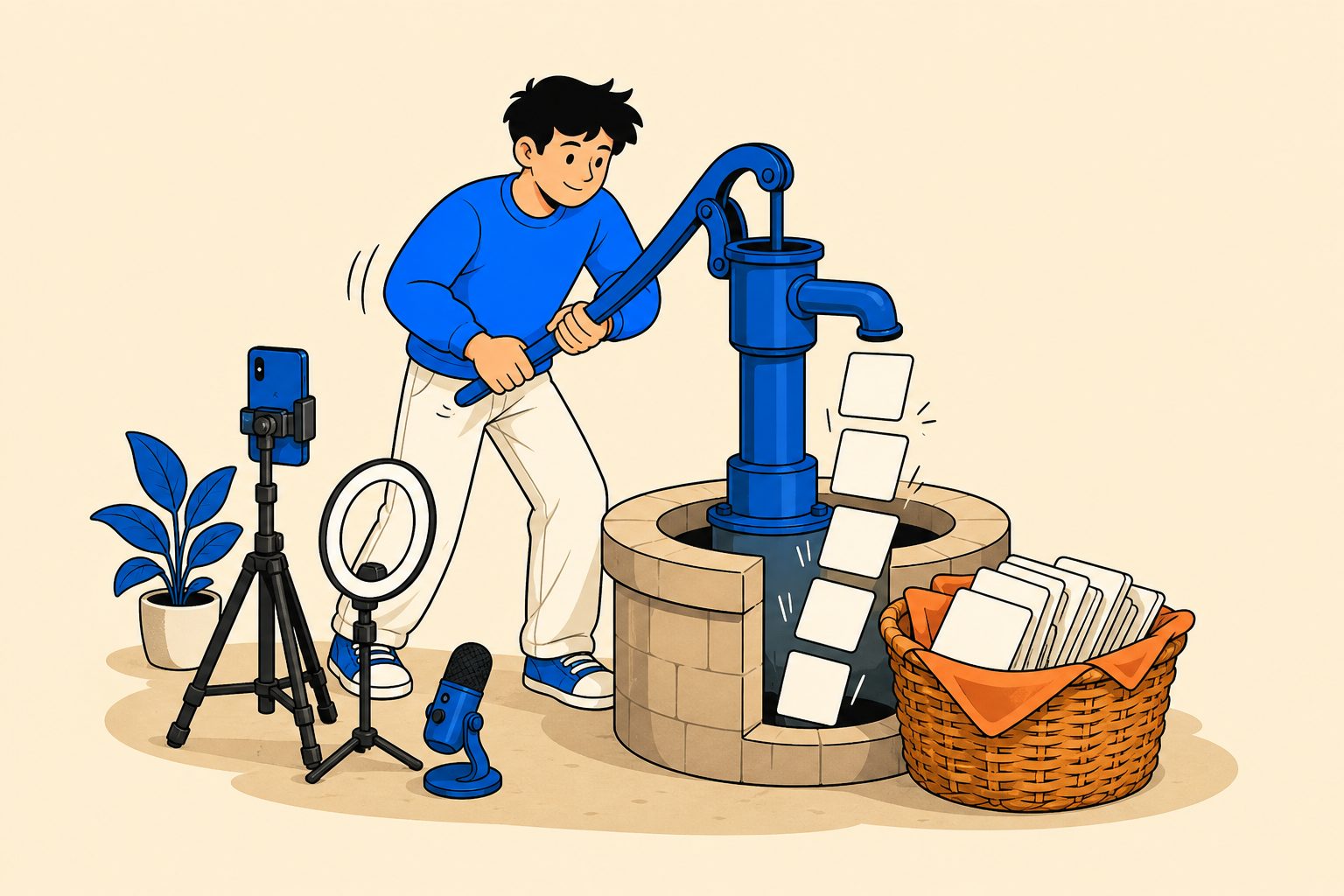
📋 TL;DR
- 1Mine autocomplete across platforms: Capture real-time, high-intent queries competitors ignore—instant validation, zero guesswork.
- 2Map intent to format in 48 hours: Match informational/transactional queries to content type—collapse research into execution mode immediately.
- 3Audit existing content for intent drift: Fix ranking mismatches using Search Console data—reclaim wasted traffic before competitors do.
- 4Brand your system, own the category: Publish the "Creator Intent Engine" framework with templates—dominate this arbitrage window now.
Build a Creator Intent Engine in 48 Hours
Introduction
Every hour you spend guessing what to create next is an hour your competitors spend publishing content. While you scroll Reddit threads looking for inspiration, they've turned audience research into a system—a framework that turns platform search bars into an endless content pipeline.
Most creators still treat content ideas as guesswork. They don't realize YouTube autocomplete, TikTok search suggestions, and Google's "People Also Ask" boxes show exactly what their audience wants—right now, for free. The creators who mine these signals and organize them into executable content clusters will dominate search results.
Here's what you waste by waiting: Every week without a creator intent engine costs you 20+ hours of manual research, months of validation cycles, and the compounding traffic gains your competitors are banking. This post shows you the exact 48-hour framework to build your own engine—from mining autocomplete queries across five platforms to mapping them into content briefs.
What a Creator Intent Engine Does (And Why Traditional Keyword Research Fails)
The Shift from Search Volume to Search Intent
Traditional keyword research taught you to chase volume metrics—find terms with 10,000 monthly searches, target them, and hope for traffic. This playbook is dead. Volume data is delayed (often 3-6 months old), platform tools hide creator-friendly queries (TikTok and Instagram don't publish volume), and Google's AI Overviews now answer high-volume questions without click-throughs.
A creator intent engine flips the script. Instead of hunting for "proven" keywords, you intercept intent signals the moment they surface. When someone types "how to grow on TikTok" into YouTube's search bar and the autocomplete suggests "how to grow on TikTok as a micro creator," a real person right now is signaling exactly what they need. No volume tool required. No guessing. Pure audience demand.
The advantage: You're no longer competing for saturated keywords. You're claiming the emergent queries—the ones not in keyword tools yet, the ones your competitors won't find for months. By the time they validate those topics, your content is already ranking and owning the SERP.
Creator Intent vs. Traditional Search Intent
Traditional search intent segments queries into four buckets: informational ("how to..."), navigational ("YouTube login"), transactional ("buy camera"), and commercial ("best camera for vlogging"). For creators, this is too broad.
Creator intent adds execution layers: Does your audience want to learn a skill (tutorial), watch someone do something (vlog/case study), compare options (review/breakdown), or download a tool (template/resource)? Each layer demands different content formats. A "how to edit videos faster" query wants a step-by-step tutorial. A "fastest video editing software" query wants a comparison post. Same core topic, opposite content structures.
Map every query you mine to one of five creator intent types—Learn (long-form how-to), Watch (case study/vlog), Compare (review/breakdown), Download (template/checklist), or Decide (opinion/perspective). Your content brief changes entirely based on which bucket the query falls into. Miss this, and you'll rank for the wrong intent—high impressions, zero clicks.
The 48-Hour Sprint: Mining Platform Search Bars for Intent Gold
Hour 1-6: Seed Topic Collection Across Five Platforms
Start with five core topics your audience cares about. If you're a productivity creator: time management, focus techniques, app workflows, habit building, and goal setting. For fitness creators: workout routines, nutrition basics, recovery methods, supplements, and program design.
Plug each seed into five search bars: Google, YouTube, TikTok, Instagram, and Pinterest. Type the seed, pause, and screenshot every autocomplete suggestion. Don't filter yet—capture everything. Google shows you "people also ask" queries. YouTube reveals "how to" and "vs" modifiers. TikTok surfaces trending angles ("...hack," "...mistake," "...for beginners"). Instagram highlights "reel ideas" and "carousel" formats. Pinterest exposes visual query patterns ("...aesthetic," "...printable," "...infographic").
Target 50-100 raw queries in this first sprint. Set a timer for six hours total—30 minutes per platform, per seed topic. Use a spreadsheet with three columns: Platform, Seed Topic, Raw Query. No organization yet. The goal is speed.
Hour 7-12: Intent Classification and Cluster Building
Open your spreadsheet and add three new columns: Intent Type, Content Format, and Cluster Assignment. Classify each query row by row.
Intent Type taxonomy:
- Informational (Learn): "how to," "what is," "guide to," "steps to"
- Navigational (Find): Brand names, person names, specific tools
- Transactional (Get): "download," "template," "free," "tool"
- Commercial (Compare): "best," "vs," "alternative," "review"
- Observational (Watch): "case study," "behind the scenes," "day in the life"
Example: "best time blocking app for ADHD" = Commercial intent. "how to time block when you have ADHD" = Informational intent. Same audience, different content.
Cluster Assignment: Group related queries under a single pillar topic. If you mined 15 queries about "time blocking," you have one cluster. The broadest query becomes your pillar content (long-form blog or YouTube video). The specific modifiers become supporting posts (short-form videos, carousels, Reels). One pillar feeds 5-10 supporting pieces.
The math: Five clusters = five pillar posts. Each pillar supports 8 supporting posts. You get 40+ pieces of content validated by real search demand, all interlinked, all driving traffic back to your authority posts.
Hour 13-18: SERP Analysis and Content Structure Mapping
For every pillar query, open an incognito browser and Google the term. Hunt for SERP features. Does the query trigger a featured snippet? People Also Ask box? Video carousel? AI Overview? Each feature tells you exactly what Google thinks users want.
SERP signals decoded:
- Featured snippet present: Google wants a concise, step-by-step answer. Your content needs a scannable list or table in the first 300 words.
- People Also Ask (PAA): Users have follow-up questions. These become your H2 subheadings. Copy the PAA questions into your outline.
- Video carousel: Google prioritizes visual explanations. Publish a YouTube video and embed your post to own both formats.
- AI Overview showing: Google is auto-answering. You need deeper analysis than the overview provides—case studies, data, or tactical breakdowns the AI won't generate.
Click the top three organic results. Scan their H2/H3 structure. Identify what they're missing—a specific example, a downloadable template, a contrarian take. This gap is your content angle.
Example: Search "how to build a content calendar." Top result is a generic process post. No template. No platform-specific breakdowns. Your content brief: "How to Build a Content Calendar (With Free Notion Template + TikTok vs YouTube Posting Cadence)." You've 10x'd the value with two additions.
Hour 19-48: Query-to-Content Matrix and Brief Generation
Open a new spreadsheet tab: Content Matrix. Columns: Pillar Topic, Supporting Queries, Content Format, Platform, Publish Date, Status.
For each cluster, map optimal formats:
- Pillar (Informational): 1,500-2,000 word blog post + 10-15 min YouTube video
- Supporting (Comparison): Instagram carousel (8-10 slides) or YouTube Short comparing two tools
- Supporting (Transactional): Gated template with email capture + TikTok "how to use this template" hook
- Supporting (Observational): Behind-the-scenes Reel showing your workflow + LinkedIn post with insights
The cadence: Publish the pillar first. Let Google index for 48 hours. Then release supporting content over the next 10 days, all linking back to the pillar. Google sees the internal link signals, recognizes topical authority, and ranks your pillar faster.
Create executable briefs for batch production:
- Target Query: Exact phrase from autocomplete
- Intent Type: Learn/Watch/Compare/Download/Decide
- Content Format: Blog/Video/Carousel/Reel/Thread
- Angle/Hook: The unique value add (template, data, contrarian take)
- H2 Outline: Pulled from PAA + competitor gap analysis
- Internal Links: Which pillar and supporting posts to cross-link
- CTA: Next step (download, watch next, subscribe)
Automate this with a Notion database or Airtable base. Every row = one brief. Filter by Intent Type to batch-write all "Learn" content in one session. You've now separated research from production. Your creator intent engine generates the briefs. You execute them.
Measuring What Matters: Validation Beyond Vanity Metrics
Search Impressions Over Social Likes
Likes don't predict SEO performance. A TikTok video with 10,000 likes but zero comments asking for more information is entertainment, not education. A YouTube video with 500 views but 50 comments asking follow-up questions signals high intent—those viewers are searching for solutions.
The metric to track: search impressions in Google Search Console and YouTube Analytics. This tells you how many times your content appeared in search results. If your blog post shows 1,200 impressions in 30 days with a 4% CTR, you get 48 clicks from people actively searching for this solution. Those clicks compound. They come back monthly. They don't require daily posting to maintain.
Compare this to Instagram: A Reel gets 5,000 views in 24 hours, then dies. Zero search distribution. Zero compounding. The creator intent engine gets you off the content treadmill.
Intent Match Rate and Content Updates
Google ranks intent alignment. If 100 people search "best project management tool for freelancers," click your post, then immediately bounce back to the SERP, Google reads this as an intent mismatch. Your rankings drop.
Track this in Google Search Console under "Performance" > "Pages." If a post ranks #8-12 with a CTR below 2%, you have an intent problem.
The fix: Audit your intro. Does the first 100 words directly answer the query? If someone searches "how to batch-create TikToks," and your intro is a 200-word story about why TikTok is important, you've already lost them. Rewrite to immediately deliver the "how." Intent matched. Bounce rate drops. Rankings climb.
Your creator intent engine isn't a one-time build. Every 60 days, revisit published pillars. Check Google Search Console for new queries driving impressions. Add those as H3 subsections. Google sees fresh content. Your rankings for all queries improve.
The update velocity: one pillar refresh per month. Not a full rewrite—a 200-500 word addition addressing emergent queries.
Conclusion
You now have the exact blueprint to build a creator intent engine in 48 hours—the systematic extraction of search demand from five platforms, the classification of intent signals into executable clusters, and the production workflow to turn queries into ranked content.
You have a repeatable research sprint to collapse months of topic ideation into two days, a query-to-content matrix to map every audience question to the optimal format, and the validation metrics to separate guesswork from growth. You're no longer creating content and hoping to find an audience—you're intercepting intent signals the moment they surface and owning the SERP before competitors find the query.
The cost of waiting is compounding. Every week without this engine running, you're manually researching one-off posts while competitors systematically claim entire topic clusters. They're publishing 8-10 supporting pieces for every pillar you agonize over. They're refreshing content with emergent queries while your archive decays.
Your next move: Open a spreadsheet. Pick five seed topics. Set a timer for six hours. Start mining autocomplete across Google, YouTube, TikTok, Instagram, and Pinterest. By tomorrow, you'll have 50+ validated queries. By next week, you'll have your first pillar published and eight supporting posts scheduled. By next month, you'll have search traffic compounding while everyone else is still stuck in research mode.
⚡ Key Takeaways
- 1Mine platform autocomplete as intent gold: Type seed topics into YouTube, TikTok, Instagram, and Google search bars to capture real-time questions and modifiers users are actively searching, revealing high-intent content angles competitors miss.
- 2Cluster queries by creator intent type: Organize collected searches into informational (tutorials), navigational (brand/person lookups), transactional (buy/download), and commercial (comparison/review) buckets to match content format to user goal.
- 3Build a query-to-content matrix in 48 hours: Map each intent cluster to optimal content types (long-form video for "how-to," Reels for "quick tips," carousel for "X vs Y") and publish cadence in a single spreadsheet.
- 4Track SERP features to decode Google's intent signal: Analyze whether target keywords trigger People Also Ask, featured snippets, or AI Overviews to confirm intent type and reverse-engineer content structure that ranks.
- 5Segment intent by platform algorithm behavior: YouTube favors longer watch time for informational queries while TikTok surfaces short "problem-solution" hooks for transactional intent—tailor content length and pacing accordingly.
- 6Audit existing content for intent mismatches: Cross-reference your published posts against query intent using Google Search Console data; refresh pieces ranking for the wrong intent by rewriting intros and CTAs to align with user goals.
- 7Operationalize with downloadable templates: Package your intent engine as a seed list worksheet, intent classification guide, and content brief generator so you can repeat the research sprint weekly without starting from scratch.
- 8Own the "creator intent engine" framework term: Publish the methodology under a branded name with case studies and templates to dominate a low-competition concept before competitors systematize audience research into a repeatable playbook.
❓ Frequently Asked Questions
What is creator intent vs traditional search intent?
Traditional search intent buckets queries into informational, navigational, transactional, and commercial—too broad for creators. Creator intent adds execution layers: does your audience want to Learn (tutorial), Watch (case study), Compare (review), Download (template), or Decide (opinion)? Same core topic demands opposite content structures. Miss this classification and you'll rank for the wrong intent—high impressions, zero clicks, wasted production time.
How do you mine autocomplete suggestions from YouTube and TikTok for content ideas?
Type your seed topic into each platform's search bar, pause before hitting enter, and screenshot every autocomplete suggestion that appears. YouTube reveals "how to" and "vs" modifiers your audience is actively searching. TikTok surfaces trending angles like "...hack" and "...for beginners." Capture 50-100 raw queries across five platforms in six hours—no filtering yet, just speed. This is your creator intent engine's raw fuel.
Why should content creators focus on creator intent over standard search intent?
Standard keyword research chases delayed volume data while your competitors claim emergent queries you won't find for months. A creator intent engine intercepts real-time demand signals the moment they surface in autocomplete—before volume tools track them, before competition saturates them. You're capturing low-volume, high-intent queries that convert into compounding search traffic, not vanity metrics. By the time competitors validate these topics, your content already owns the SERP.
What are the best tools to build a creator intent engine quickly?
You don't need expensive tools—just platform search bars (Google, YouTube, TikTok, Instagram, Pinterest), a spreadsheet for classification, and Google Search Console for validation. Notion or Airtable automates your query-to-content matrix and brief generation. The unfair advantage isn't the tools—it's the systematic 48-hour sprint that turns autocomplete suggestions into executable content clusters while competitors manually research one-off posts.
How to validate low-volume creator intent queries for content planning?
Track search impressions in Google Search Console and YouTube Analytics, not social likes. If your content shows 1,200 impressions in 30 days with 4% CTR, you're capturing 48 monthly clicks from active searchers—compounding traffic that doesn't require daily posting. Run SERP analysis: featured snippets, People Also Ask boxes, and video carousels tell you exactly what Google thinks users want. Intent matched equals rankings that climb.
Popular Playbooks
Can You See Who Viewed Your Instagram Reels?
Instagram doesn't show a viewer list for reels. Here's what the view count and insights actually tell you, and where to check them in the app.
Your Best Time to Post Instagram Is in Your Own Data
Universal charts guess when to post. Your Instagram Insights reveal the real best time to post instagram, based on when your own followers scroll.
What Is Hook Rate? How to Calculate and Improve It
Learn what hook rate measures, calculate it with a worked example, and see how a real Reel comparison can guide your next opening.
What Is a Good Skip Rate on Instagram Reels?
What is a good skip rate on Instagram Reels? Compare findings from 260 Reels and use skip rate with watch time to decide what to improve next.
How Many Views Is Viral on Instagram?
How many views is viral on Instagram? Compare your creator stage, find your standout Reels, and use what they do well to improve your next posts.